







Search Results for: malicious claims
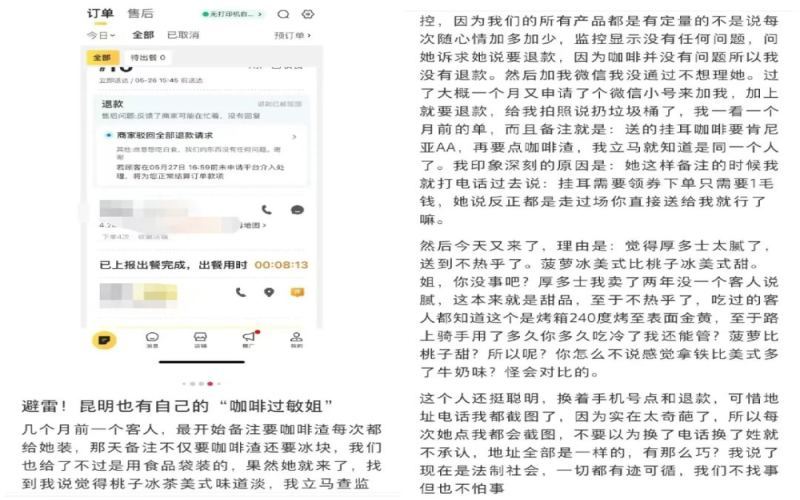
Customers repeatedly apply for refunds citing poor taste, multiple coffee shop owners expose encounters with the same person
Recently, the "Allergy Sister" incident in Wuhan has sparked widespread attention in the coffee community, and similar phenomena of customers requesting refunds from merchants for various reasons are not uncommon in the food and beverage industry. Some coffee shop owners have reported encountering a customer who repeatedly applied for refunds on the grounds that the drinks' taste was not to their liking, suspected to be an "Allergy Sister alt account." Investigations revealed that this customer had placed orders at multiple shops and repeatedly applied for refunds, citing reasons such as the drink being too bland, too sweet, or too cloying. Some merchants chose to appease the customer to protect their reputation, but others refused to compromise and warned their peers to be vigilant. Such behavior not only harms merchants' interests but also encourages a culture of malicious claims. This article reviews the course of events and explores reasonable ways for merchants to defend their rights when responding to consumer complaints. [more…]
The gray area of store visits and commercial shoots is spreading, and many cafés have reluctantly posted notices refusing commercial photography.
In recent years, the trend of professional venue visits and commercial shoots has grown increasingly intense, forcing many cafés to publicly declare their refusal of unpaid commercial photography and venue-visit behavior. What was originally a mutually beneficial relationship between visit bloggers and businesses has now soured due to tactics such as false promotion by some individuals, using follower counts to extort free items, and malicious negative reviews. Some even go so far as to occupy public space for extended photo shoots with bags of equipment after purchasing only a single drink, seriously disrupting other customers' experience. Café owners, suffering immensely from these chaotic practices, have posted notices one after another to protect their in-store environment. This article will explore in depth the causes of this phenomenon, the real experiences of café owners, and their efforts to safeguard the peaceful atmosphere of their cafés. [more…]
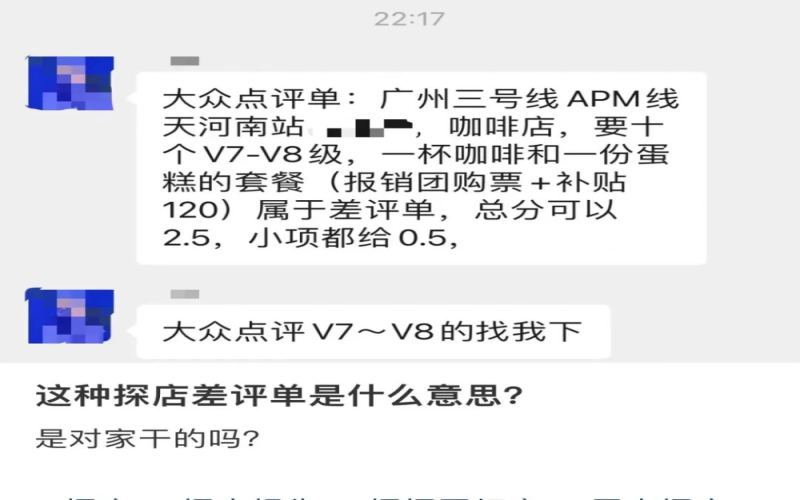
Coffee shops face malicious negative reviews and chaotic store visits: How trustworthy are consumer references now?
Before deciding which café to visit, many people are in the habit of first checking ratings online, scrolling through reviews, or watching a few探店 videos to do their homework. But when "glowing reviews aren't necessarily real, and bad reviews aren't necessarily fake" becomes the norm,探店 reviews themselves turn into a business. This article sorts through the chat records of review-bombing exposed on Xiaohongshu, several cases in recent years of探店 bloggers "flopping," as well as the payment chains and regulatory gaps in the探店 industry, and invites legal experts to offer advice on defending one's rights in cases of malicious bad reviews, dine-and-dash "霸王餐" behavior, and similar phenomena. For café owners and consumers, seeing clearly how this traffic game operates may be more important than arguing over whether a single review is real. [more…]
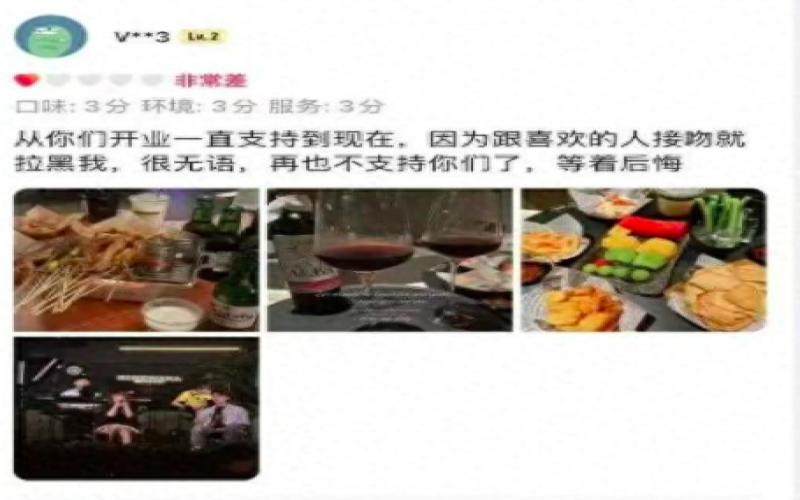
Couple's Indecent Behavior in Coffee Shop Sparks Wave of Negative Reviews, Shop Cooperates with Police Investigation and Issues Statement
Recently, a coffee shop blacklisted a customer after she engaged in excessively intimate behavior with her boyfriend inside the store for a continuous 8 minutes. The customer then posted a malicious negative review on a third-party platform, drawing public attention. The shop retrieved surveillance footage to clarify the truth and cooperated with the police investigation, while also issuing a statement acknowledging its negligence. As the incident escalated, the public began discussing the boundaries of intimate behavior in public places. Lawyers pointed out that indecent behavior may lead to administrative penalties, and those who film and spread the video may also bear legal responsibility. Front Street Coffee reminds everyone to be mindful of their behavior in public places and respect the feelings of others. [more…]
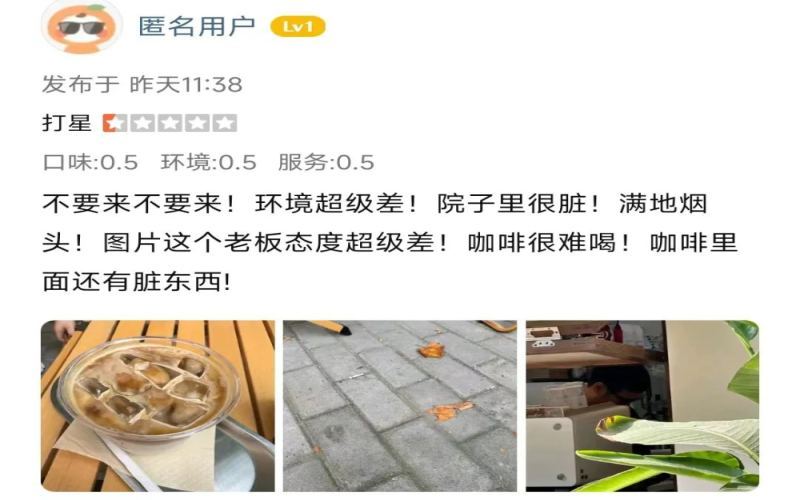
Coffee shop refuses commercial photo shoot, receives malicious negative review; surveillance footage reveals the entire process of a customer putting a foreign object into the coffee
Nowadays, it has become the norm to check review platforms before going out to spend money, and high ratings and bad reviews often sway people's choices. However, the review system can also be exploited by people with ulterior motives. Recently, a coffee shop owner revealed that because they refused a customer's request to do commercial photography inside the shop, they were anonymously given a 0.5-star bad review, and were even accused of having something dirty in the coffee. After checking the surveillance footage, the owner discovered that the so-called foreign object had actually been placed into the cup by the customer for a staged photo. After the incident came to light, it sparked heated discussion among netizens, with many lamenting how difficult it is for businesses to defend their rights, once again bringing the topic of coffee shops refusing commercial photography into the spotlight. [more…]
Legal Interpretation of the Luckin Low-Price Order Incident: Consumer Red Lines and Platform Liability Under System Vulnerabilities
The unusual pricing incident involving Luckin Coffee's delivery platform packages has drawn widespread attention. After consumers placed orders at extremely low prices, their orders were unilaterally cancelled, giving rise to legal disputes. Citing the views of a legal blogger, the People's Court Daily pointed out that when a merchant's pricing error results from staff mistakes, the merchant may claim a major misunderstanding to rescind the contract, but this must be resolved through litigation or negotiation. Ordinary consumers who unintentionally buy low-priced drinks have not broken the law, but those who knowingly exploit a system loophole and maliciously place large numbers of orders may run afoul of the law. This article will analyze the course of events, the legal basis, and Luckin's compensation measures in detail, while reminding coffee lovers that when enjoying discounts they must hold fast to the bottom line of good faith and avoid crossing the red line of the law. [more…]
Woman Extorted a Popular Milk Tea Brand Ten Times by Complaining About Foreign Objects in Takeout, Sentenced to One Year and Three Months in Final Appeal
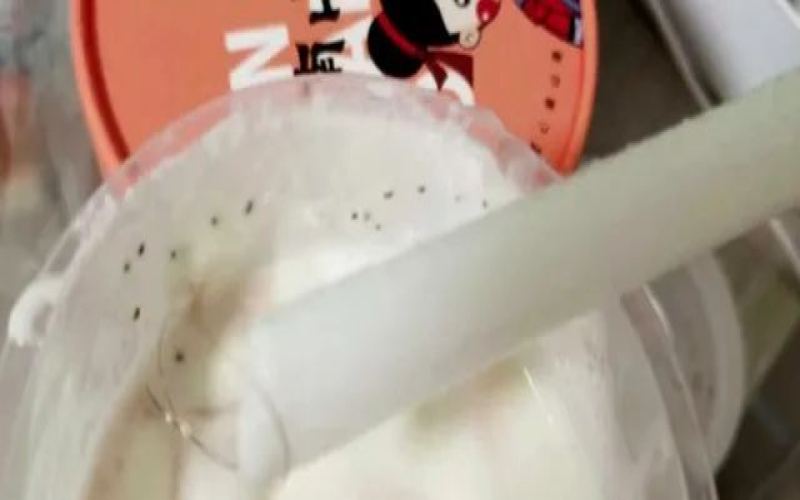
A woman surnamed Zhang used the excuse of finding hair in takeaway milk tea to file ten compensation claims against multiple outlets of the same milk tea chain within just over a month, using the same photo six times, and collected more than 15,000 yuan in total. The merchants initially chose to compromise to protect the brand image, but as similar complaints appeared frequently, the brand's loss prevention department launched an investigation and called the police. Police arrested the woman on her eleventh complaint, and the court ultimately sentenced her to one year and three months in prison, suspended for one year and six months, and a fine of 5,000 yuan for extortion. The case exposes the phenomenon of some consumers abusing the tenfold compensation clause of the Food Safety Law to file malicious claims, and also sounds a warning bell for the catering industry in handling similar disputes. [more…]

ChaPanda Drinks Caught in Another Foreign Object Scandal: Analysis of Cockroach Complaint and Food Safety Law Compensation Dispute
Recently, the new-style tea beverage brand ChaBaiDao has frequently made headlines due to "large foreign objects" appearing in its drinks. From "real spider milk tea" to nail clippers, and now the latest cockroach incident, consumer complaints have been continuous. These incidents coincide with ChaBaiDao's plan to go public in Hong Kong, sparking discussions about its food safety management and whether there are malicious claims. This article reviews the detailed process of the ChaBaiDao cockroach complaint, analyzes the disagreement between the consumer's claim of 1,000 yuan and the merchant's offer of only 200 yuan, and explores the potential issues of insufficient employee training and "loophole attacks" under the Food Safety Law amid the rapid expansion of chain brands. At the same time, we will also focus on the current state of food safety in the industry and provide professional information for coffee enthusiasts. [more…]
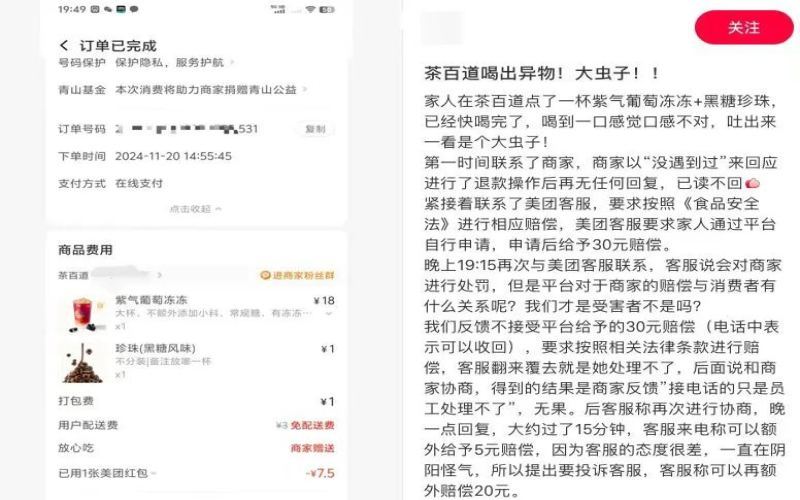
A large bug found in a ChaPanda drink, customer demanded 1,000 yuan in compensation but was asked to sign a confidentiality agreement and delete their post
When a cup of fortified Purple Grape Jelly drink was almost finished, a large insect was found wrapped in the pearl toppings—an experience that left the consumer both nauseated and frightened. Even more surprising, during compensation negotiations with the ChaPanda merchant, although the other party eventually verbally agreed to pay 1,000 yuan, they required the consumer to sign an agreement and delete related posts and comments. The consumer believed this move was an attempt to portray them as a malicious claimant and refused to sign. Both sides stuck to their own accounts, and the local food and drug administration has also intervened and summoned the parties. How will this food safety dispute ultimately end? What obstacles did the consumer encounter on the path to defending their rights? This article sorts out the entire process of the incident for you. [more…]
Is Cambodian civet coffee really authentic? A guide to kopi luwak bean origins and brand selection
Kopi luwak has always been famous for its high price and unique flavor, but the controversies surrounding it have never ceased. Does Cambodia produce authentic civet coffee? And as a traditional producing region, which brands in Indonesia are trustworthy? This article visits local workshops in Cambodia to take you through the complete processing chain of civet coffee, from bean selection, digestive fermentation, washing, dehulling, and air-drying to roasting, and compares the price differences of Indonesian kopi luwak in various places. At the same time, we will also clarify common misunderstandings about the ethical controversy over civets, and include Front Street Coffee's purchasing advice to help coffee lovers view this highly talked-about coffee rationally. [more…]
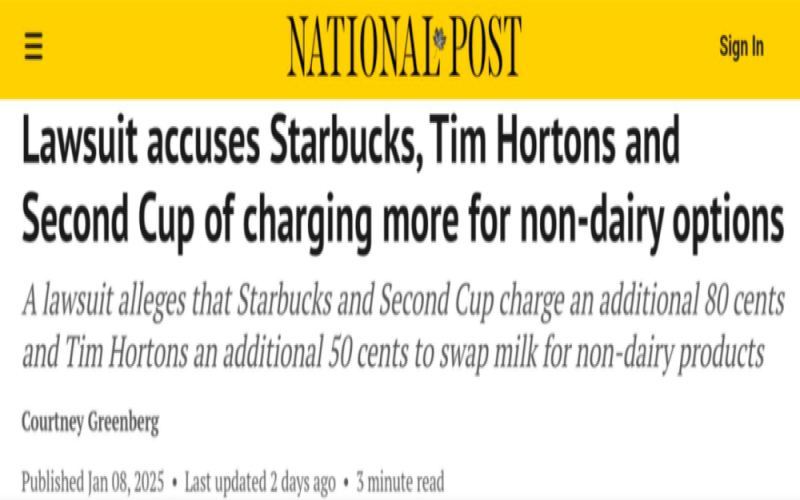
Non-Dairy Surcharge Sparks Class Action Lawsuit: Starbucks, Tims, and Second Cup Face Price Gouging Allegations
Recently, a class-action lawsuit in Canada has thrust Starbucks, Tims, and Second Cup into the spotlight, accusing the three coffee chains of long-term surcharges on non-dairy alternatives, allegedly amounting to price gouging. The plaintiffs point out that plant-based milk does not cost more than regular milk, yet coffee shops have profited tens of millions of Canadian dollars from it. Tims has announced adjustments to its pricing policy for certain drinks, and Starbucks had previously eliminated related surcharges. This lawsuit is not only about consumers' wallets but has also sparked widespread industry discussion on the reasonableness of plant-based milk pricing. [more…]
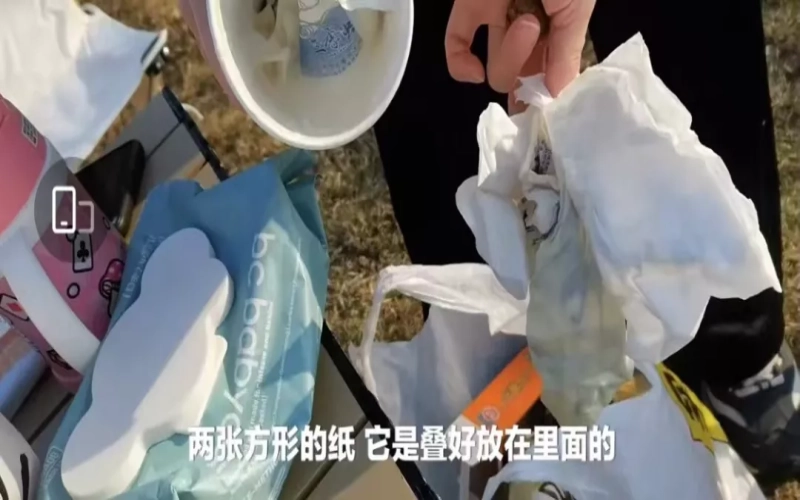
A whole tissue paper found in a Chayan Yuese drink—netizens ask: staged stunt or malicious smear?
Recently, news about a whole tissue being found in a Sexy Tea milk tea has sparked heated discussion online. Some netizens suspect this is a self-staged publicity stunt by the brand to divert attention, while others believe it could be malicious smearing by a competitor. As of now, Sexy Tea has not made any official response to the matter. What is the truth behind the incident? Netizens have reacted relatively rationally, with various opinions clashing. This article will sort out the sequence of events, present multiple viewpoints, and follow up on subsequent developments. [more…]
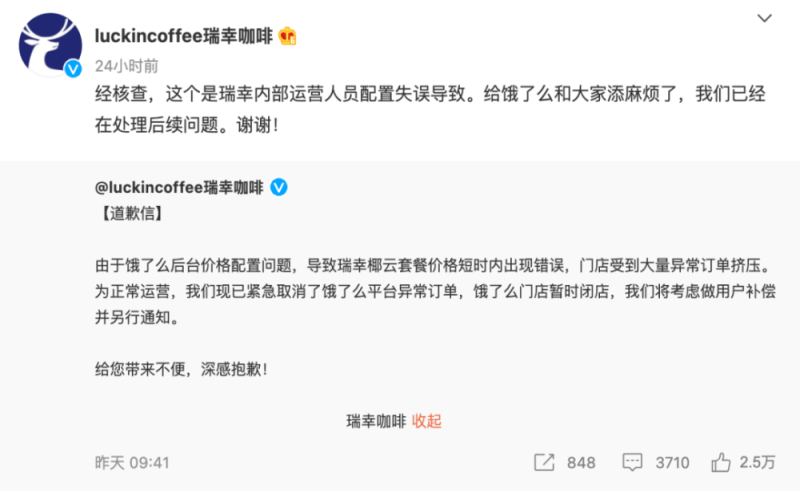
Is Luckin's forced cancellation of low-priced orders illegal? Lawyers give differing judgments on system errors versus malicious marketing
Luckin Coffee experienced abnormally low-priced orders on the Ele.me platform due to an operational configuration error. After a large number of users rushed to place orders, Luckin handled the situation by unilaterally canceling orders and temporarily suspending online operations. This move sparked strong dissatisfaction among consumers and also drew attention from the legal community: lawyers on one side argued that canceling paid orders was suspected of infringing on consumer rights; the other side pointed out that if it was a major misunderstanding, the contract could be revoked in accordance with the law. If there was intentional malicious marketing, it could also constitute fraud. In the end, Luckin promised to bear all losses and issue compensatory vouchers. This article sorts out the course of the incident, netizen feedback, and lawyers' views, so that coffee lovers can understand the full picture of this controversy. [more…]
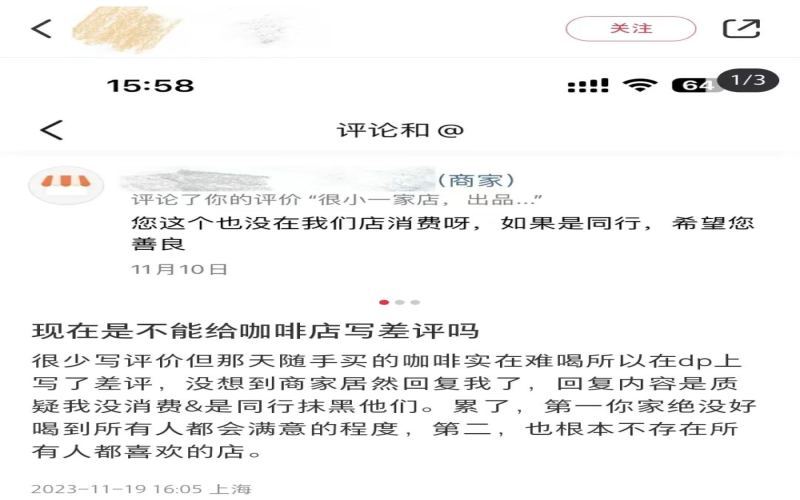
Coffee shop blames competitors for bad reviews? Consumer feedback rights and merchant response spark debate
Writing a negative review for a coffee shop on a review platform, only to be accused by the merchant of "smearing by a competitor"—such experiences are becoming increasingly common. Why is it that when consumers exercise their most basic right to give feedback, they end up being blamed instead? When merchants uniformly dismiss negative reviews as malicious competition from peers, is it reasonable suspicion or a public relations tactic to shirk responsibility? Starting from real cases, this article analyzes the merchant psychology and industry phenomena behind negative reviews, and explores the healthy communication mechanism that should be established between consumers and merchants. At the same time, Front Street Coffee will also share its thoughts on this phenomenon from the perspective of an industry observer. [more…]
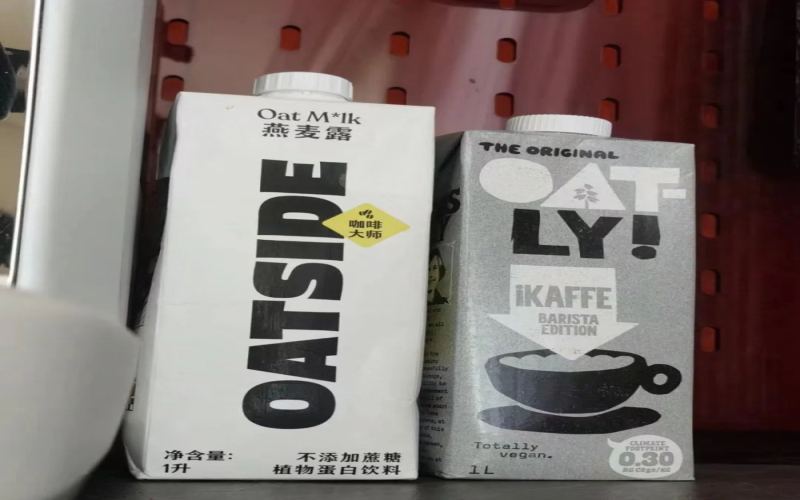
OATSIDE oat milk suspected of being disparaged by paid posters; social platform search pages flooded with posts praising OATLY and belittling OATSIDE, sparking heated discussion.
For consumers who are lactose intolerant yet can't live without caffeine, oat lattes have become a preferred alternative to traditional lattes. As the oat milk market expands rapidly, brands such as OATLY and OATSIDE have gradually entered the public eye. Recently, however, some netizens noticed that when searching for OATSIDE on social platforms, the page would be flooded with a large number of posts praising OATLY while bashing OATSIDE, with posting times concentrated, accounts mostly newly registered, and copy formats strikingly similar, sparking fans' suspicions that a competitor had hired paid internet trolls. Is this controversy a case of malicious smearing, or is there another story behind it? And what do malicious attacks mean for brands and consumers? [more…]
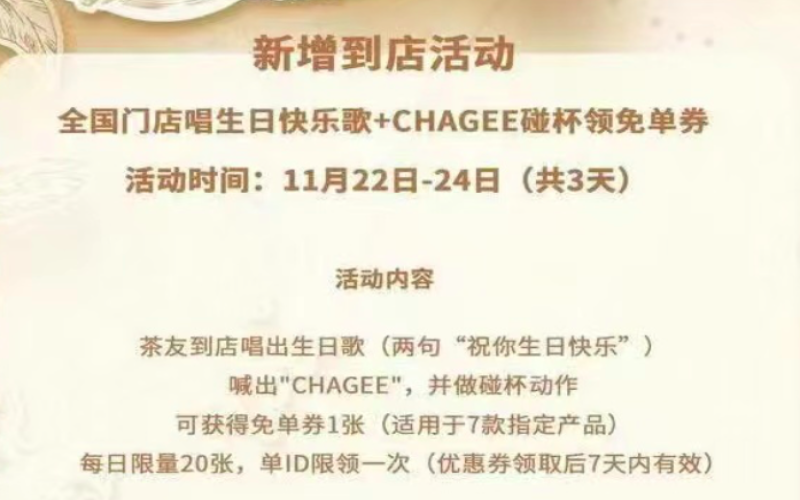
Chagee's seventh anniversary singing-for-free promotion sparks controversy: stores mandatorily record videos, raising consumers' privacy concerns
To celebrate its seventh anniversary, Chagee launched a seven-day giveaway of 700,000 free drinks, and the singing-for-a-free-drink option, being the easiest to participate in, quickly attracted deal hunters. However, after the second round began, customers found that getting the free voucher was not so simple: some stores required two people to sing together and clink cups, some staff outright denied the promotion existed, and even more surprisingly, many participants were filmed or recorded throughout by staff, a requirement not disclosed in advance in the official tweets. Customer service responded that the event was held precisely for filming, and internal notices also required photos of every singing customer to be kept on file. This practice sparked concerns about how customers' personal images would be used, and although several staff members said the content was only uploaded to internal work groups for supervisors to review, the privacy controversy continues to grow. [more…]
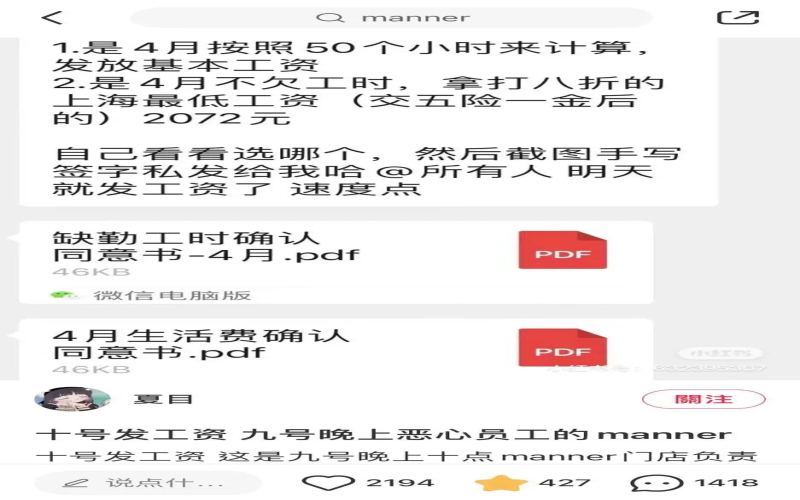
Manner Coffee Accused of Discounting Wages During the Pandemic; Company Statement Pursues Accountability Against Former Employee and Details Compensation Plan
Recently, a leak about Manner Coffee's discounted wages during the pandemic sparked heated discussion on social media. The leak claimed that Manner required employees to choose between two compensation options: hourly basic pay, or 80% of Shanghai's minimum wage of 2,072 yuan. The incident quickly trended on Weibo, and Manner subsequently issued a statement identifying two former employees as having made false claims, and said it had reported the matter to police to pursue criminal and civil liability. The statement also detailed wage payment standards during the pandemic, saying its treatment was far above Shanghai's minimum wage, and implicitly suggested that employees of competitor Mstand Coffee were involved. This article reviews the course of the incident, both sides' accounts, and lawyers' views, and explores the legality of barista pay during the pandemic and the state of the industry. [more…]

Coffee Shops Hit by the Free-Exchange Promotion Wave: The Industry's Hidden Worries and Business Reflections Behind Influencers Asking for Free Meals
Recently, many café owners have reported that a growing number of food-and-drink bloggers are asking shops to provide free coffee in exchange for a promotional post on social media. If refused, the shops may even face the threat of a bad review. This seemingly mutually beneficial collaboration model is gradually turning into a headache for businesses. This article takes a closer look at the origins of "coffee-for-promotion swaps," the potential risks behind them, and the reputation and quality standards that cafés should truly rely on in running their business. It also includes relevant information about Front Street Coffee for coffee lovers' reference. [more…]
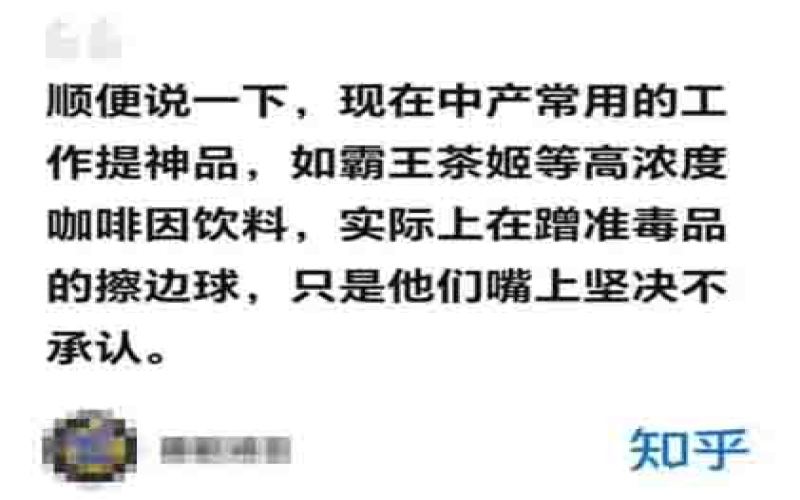
The caffeine controversy surrounding Chagee continues to intensify, with a full analysis of the brand's response and stock price fluctuations.
Recently, Chagee has found itself in a public opinion storm over the caffeine content of its drinks. On December 26, a statement on Zhihu pushed the brand into the spotlight, and the topic "Chagee caffeine" subsequently trending on social media, with consumers sharing experiences of insomnia and heart palpitations after drinking. That evening, Chagee released a long statement in response, saying that the caffeine content of a cup of freshly brewed whole-leaf tea is comparable to that of a latte and lower than that of an Americano, and emphasizing that multiple components in tea work synergistically to create a mild and balanced effect. At the same time, the brand's U.S. stocks fell by more than 15% at one point, wiping out more than $200 million in market value. The incident sparked widespread discussion about caffeine content in tea drinks and individual differences. [more…]
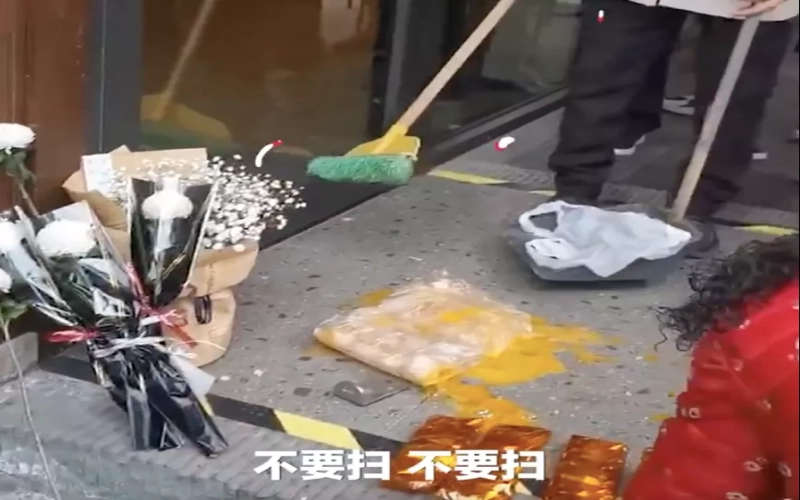
Mixue Bingcheng leverages the Starbucks police incident for marketing, Snow King banners and Lucky Cup tactics spark netizen controversy
Starbucks has recently been caught in successive public opinion storms due to driving away on-duty police officers and product price increases, with some consumers even expressing their dissatisfaction by sending white flowers and throwing eggs. Just at this time, several Mixue Bingcheng stores in Yinchuan, Ningxia, hung banners welcoming on-duty police officers to rest inside, which was seen by the outside world as opportunistic marketing. Although this move won praise from some netizens, who said it showed great vision and relied entirely on the contrast with peers, it also attracted criticism for malicious marketing and suspicion of being a publicity stunt. Subsequently, the market manager, worried about triggering guided public opinion, notified the stores to take down the banners. Mixue Bingcheng has always used simple and direct marketing methods, from catchy songs to donations and now to this banner response, with an obvious intention to ride hot topics. [more…]